In Plastic Classics, Old Masters are given a contemporary twist. I use anything of the right size, shape and colour: toys, shells, buttons, beads, broken jewellery etc. No colour is added – everything is used exactly ‘as found’.

Impressionist paintings are the perfect inspiration for my work. Both need to be viewed in two ways – from a distance to make sense of the whole image, and close up to identify the materials (representing the brush strokes).
Japanese Bridge, after Monet, 80cm x 80cm, 2011
Similarly, the 3D nature of Van Gogh’s thickly applied paint which he squirted straight from the tube, lends itself to interpretation using found materials. Van Gogh painted 17 different versions of his Sunflowers in varying compositions and with different coloured backgrounds. I have made several versions of Sunflowers – each one is unique, according to the materials found at the time.

Sunflowers, after Van Gogh, 81cm x 64cm, 2014

Re-interpreting work by previous artists is nothing new. Centuries ago, artists learned their craft by re-working paintings by their predecessors. Picasso famously copied works by many artists, creating 44 studies of Velasquez’ Las Meninas alone, with his unique style. Da Vinci’s iconic Mona Lisa has been re-worked many times by artists including Marcel Duchamp who gave her a beard.
Mona Lisa, after Da Vinci, 79cm x 71cm, 2011

Vincent Van Golf, 70cm x 50cm, 2022 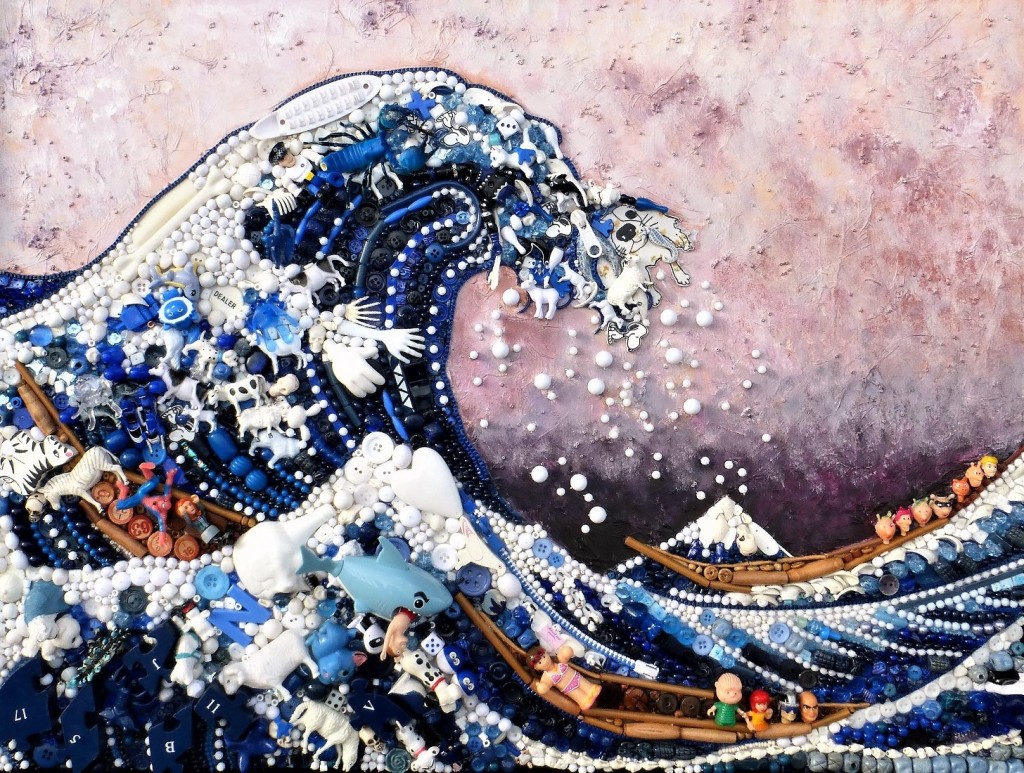
The Great Wave, after Hokusai, 70cm x 56cm, 2016 
Sunflowers, after Van Gogh, 80cm x 62cm, 2021 
Madonna and Child, after Vrubel, 60 x 80cm, 2020 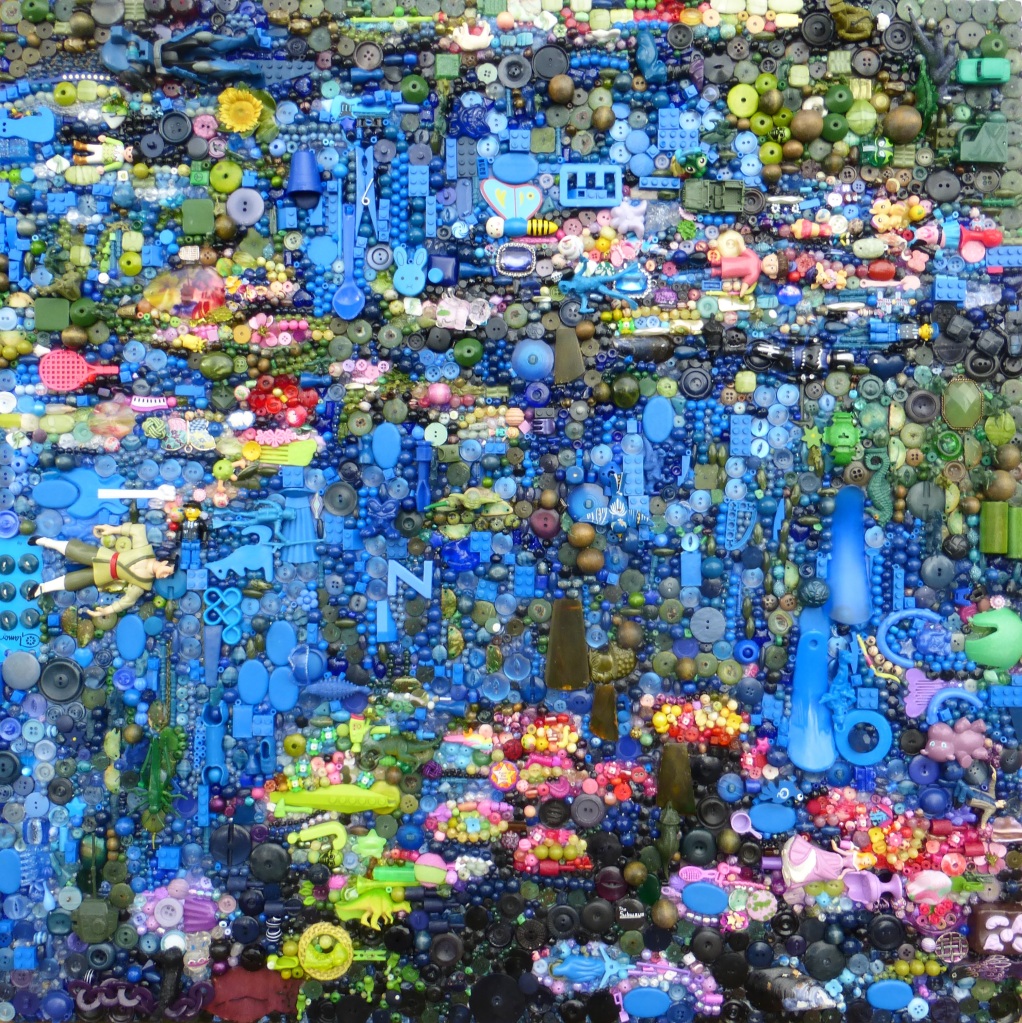
Waterlilies, after Monet, 70cm x 70cm, 2015 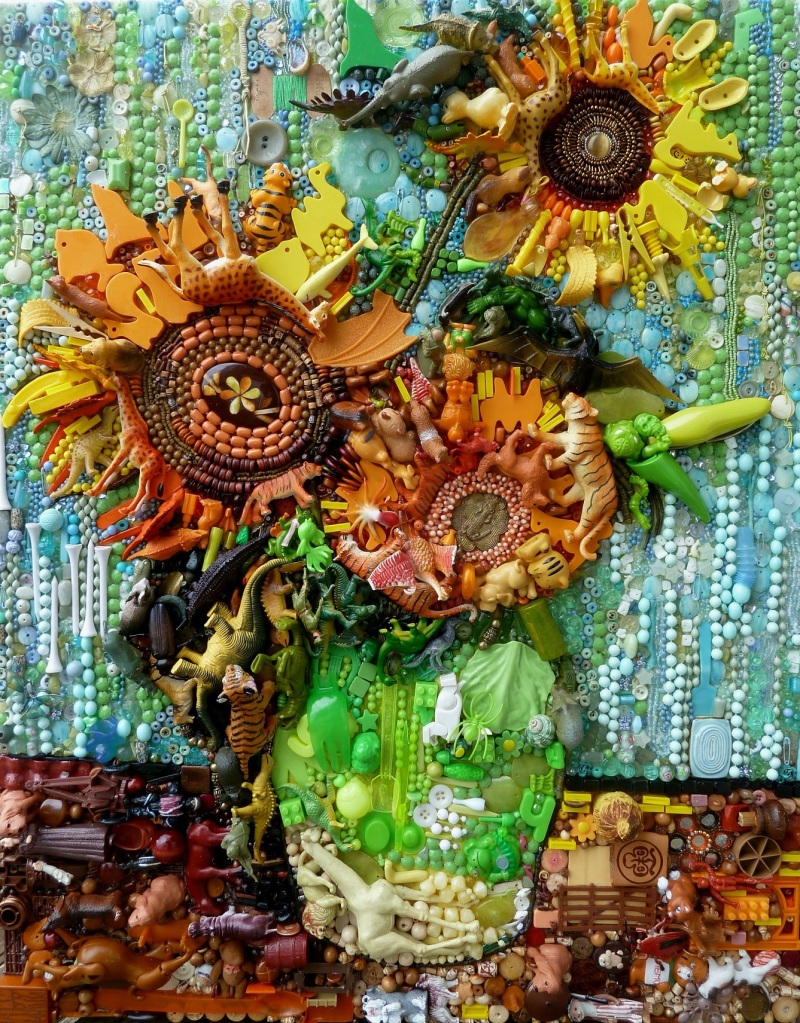
Three Sunflowers, after Van Gogh, 73cm x 58cm, 2012 
Girl with a Pearl Earring, after Vermeer, 74cm x 69cm, 2011 
Madonna and Child, after Sassoferrato, 80cm x 80cm, 2017 
Wheatfield with Cypresses, after Van Gogh, 83cm x 65cm, 2018 
The Starry Night, after Van Gogh, 83cm x 65cm, 2018 
The Kiss, after Klimt, 80cm x 80cm, 2019 
Marilyn, after Warhol, 60cm x 60cm, 2015 
Angel of the Annunciation, after Sano Pietro, 94cm x 74cm, 2013
 Jane Perkins